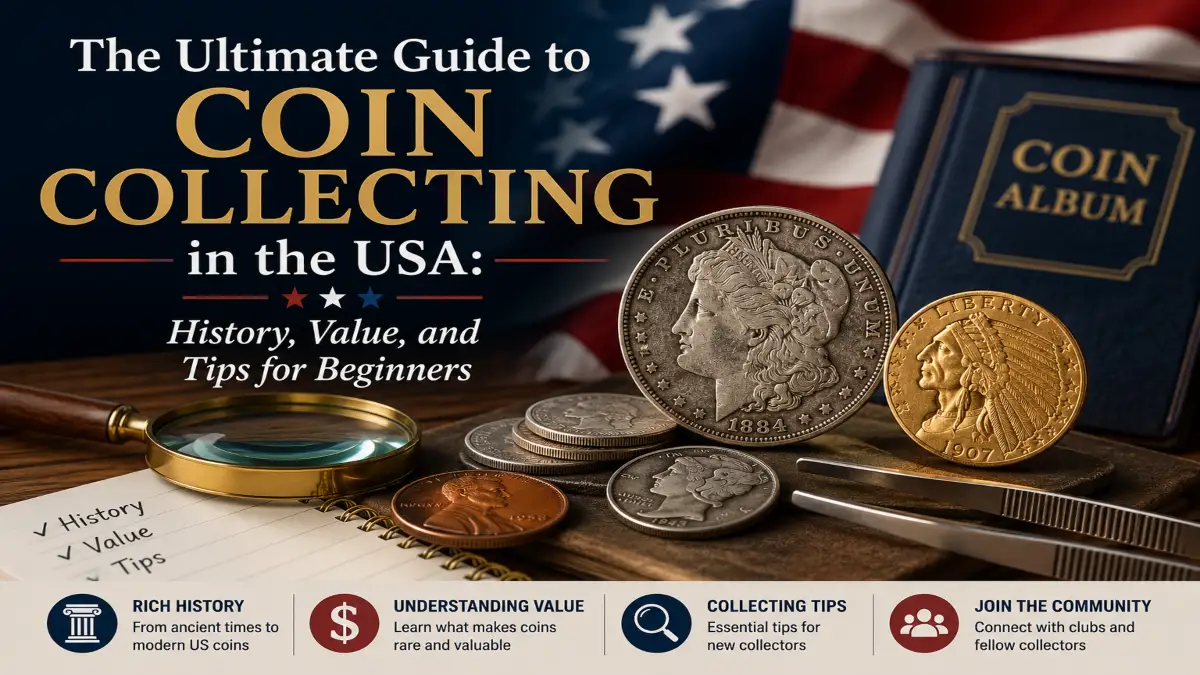
Coin collecting—known formally as numismatics—is one of America’s oldest and most rewarding hobbies. From the copper pennies in your pocket to the silver dollars that evoke the Wild West, U.S. coins tell the story of a nation. Whether you’re a history buff, an investor looking for a tangible asset, or simply someone who loves the thrill of finding a rare piece in your spare change, this guide will walk you through everything you need to know about collecting coins in the United States.
A Brief History of U.S. Coins
Before the U.S. Mint was established in 1792, Americans used a mix of foreign currencies—Spanish silver dollars, British pounds, and even gold escudos from Latin America. The newly formed government knew that a unified national currency was essential for trade and national identity. The Coinage Act of 1792 created the U.S. Mint in Philadelphia and introduced the dollar as the standard unit of money.
The first coins struck were the half dime (silver) and the large cent (copper). Over the next two centuries, iconic designs emerged: the Draped Bust, Seated Liberty, Indian Head, and the Lincoln cent that still exists today. The 20th century brought masterpieces like the Mercury dime, the Buffalo nickel, and the Saint-Gaudens double eagle (widely considered the most beautiful U.S. coin ever made). Each coin carries not just metal value, but historical context—from the Civil War-era “hard times” tokens to the wartime steel pennies of 1943.
Why Collect Coins? The Benefits for American Enthusiasts
For many, coin collecting is a family tradition passed down through generations. But it offers concrete advantages:
- Historical Connection – Holding a coin minted in 1856 means touching an object that witnessed the Kansas-Nebraska Act, the Dred Scott decision, and the final years of Franklin Pierce’s presidency. Coins are miniature time capsules.
- Tangible Investment – Unlike stocks or crypto, coins are physical assets. Rare U.S. coins have consistently appreciated over decades. The famous 1913 Liberty Head nickel sold for over $4 million in 2018. While such rarities are out of reach for most, common silver dimes from the 1940s are worth multiple times their face value today due to silver content alone.
- Accessible to Everyone – You can start with pocket change. A 1999 Pennsylvania state quarter with a specific die error might be worth $10 or more. Some modern coins, like 2017-P Lincoln cent with a “double die” reverse, have sold for hundreds of dollars.
- Educational Value – Collecting teaches attention to detail, historical research, and basic grading skills. It’s a hobby that exercises your brain.
Key Coins Every U.S. Collector Should Know
If you’re targeting the American audience, certain coins are essential knowledge. Here are the heavy hitters:
- The 1909-S VDB Lincoln Cent – The first Lincoln cent, designed by Victor David Brenner. Only 484,000 were struck at the San Francisco Mint with Brenner’s initials on the reverse. A well-worn example can fetch $700+; uncirculated versions exceed $2,000.
- The 1916-D Mercury Dime – Key date in the Mercury dime series (1916–1945). Mintage of just 264,000. Even a “good” grade example is worth $1,000+.
- Silver Eagles – Not historical, but hugely popular. The American Silver Eagle bullion coin debuted in 1986. Some years have low mintages; the 1995-W proof sold for over $10,000.
- Morgan Dollars (1878–1904, 1921) – The quintessential American silver dollar. The 1893-S Morgan is the king of the series: fewer than 100,000 minted, values start at $5,000 in low grades.
- Walking Liberty Half Dollars – Stunning design by Adolph A. Weinman (1916–1947). The 1921-D and 1921-S are rare, with prices reaching $1,000+ even in circulated condition.
How to Start Your Coin Collection on a Budget
You don’t need a six-figure budget to build a meaningful U.S. coin collection. Here’s a practical roadmap:
Step 1: Focus on Modern Coins in Circulation – Check your pocket change for quarters 1964 and earlier (90% silver). Look for 2009 Lincoln cents (low mintage), 1974 aluminum cent (extremely rare but possible), or any coin with obvious minting errors. Use a magnifying glass to inspect for doubled dies, off-center strikes, or clipped planchets.
Step 2: Buy “Junk Silver” – This term refers to pre-1965 dimes, quarters, and half dollars that contain 90% silver. Dealers sell them in bags or rolls near the melt value. As of 2026, silver is around $25–30 per ounce, so each $1 face value of junk silver contains about 0.715 ounces of pure silver. It’s a hedge against inflation and a fun way to own history.
Step 3: Join the American Numismatic Association (ANA) – Membership ($40/year) gives you access to educational resources, a monthly magazine, and a reputable dealer directory. The ANA also offers free grading guides and online courses.
Step 4: Visit Local Coin Shows – Every state has regular shows. Bring cash, talk to dealers, and handle coins before you buy. Always ask for raw (non-slabbed) coins in your price range—$20–50 can buy you a nice Indian Head cent or a worn Buffalo nickel.
Grading and Authentication: The Backbone of Coin Value
In the U.S. market, a coin’s grade determines its value. The standard scale runs from Poor-1 to Mint State-70. Three major third-party grading services dominate: PCGS (Professional Coin Grading Service), NGC (Numismatic Guaranty Company), and ANACS. A coin “slabbed” by PCGS or NGC commands a premium because experts have verified its authenticity and condition.
Basic grades you’ll encounter:
- Good (G-4) – Major details visible but heavy wear
- Very Fine (VF-20) – Moderate wear, all letters readable
- Extremely Fine (EF-40) – Light wear on high points
- About Uncirculated (AU-50) – Traces of wear only on the highest spots
- Mint State (MS-60 to MS-70) – No wear; MS-70 is perfect
Never clean your coins. Cleaning scratches the surface and destroys numismatic value. A dirty coin worth $200 becomes a $20 coin after scrubbing.
Pitfalls to Avoid as a New Collector
The coin market has its share of scams and rookie mistakes. Beware of:
- Television “rare coin” deals – Infomercials selling “limited edition” state quarters for $99 each. Those coins are worth 25 cents.
- eBay “error coins” – Many sellers intentionally damage coins and call them mint errors. Learn the difference between a genuine doubled die and worthless “machine doubling.”
- Overgrading – Never trust the grade on a flip from a unknown dealer. Learn to grade yourself using ANA’s free resources.
- Buying raw key dates – If a coin is worth $1,000 in certified condition, why would a dealer sell it raw for $200? Unless it’s a counterfeit or heavily damaged.
Where to Buy and Sell U.S. Coins
Reputable sources include GreatCollections (online auction), Heritage Auctions (for high-end rarities), and local coin shops (LCS). For selling, always get three quotes. Bullion coins like Silver Eagles can be sold to any dealer at near spot price. Rare coins are best auctioned through a specialist.
Online communities like r/coins on Reddit and CoinTalk forums offer free advice and market insights. Many experienced collectors love helping beginners avoid mistakes.
The Future of Coin Collecting in America
The U.S. Mint continues to release innovative products—the American Women Quarters program (2022–2025) honors figures like Maya Angelou and Sally Ride. Collecting modern Mint sets remains popular. Meanwhile, younger generations are entering the hobby through “error hunting” with pocket change, thanks to YouTube channels showing how to spot valuable varieties.
Cryptocurrency and digital assets haven’t diminished the appeal of physical coins. If anything, the tangibility of a silver dollar offers a reassuring counterpoint to the volatility of crypto. Coins are history you can hold.
Final Thoughts: Start Small, Think Long
You don’t need a 1909-S VDB to call yourself a collector. Start with a Whitman folder of Lincoln cents—fill every hole from 1941 to today. That simple act will teach you about mintage figures, mint marks (D for Denver, S for San Francisco, no mark for Philadelphia), and die varieties. Within months, you’ll recognize a 1972 doubled die obverse or a 1960 small-date cent on sight.
Coin collecting is uniquely American—democratic, historical, and full of hidden treasures. Whether you’re saving silver for a rainy day or chasing a legendary rarity, every coin has a story. And the best part? The next chapter could begin with the change in your pocket right now.
Happy hunting, and may your finds always be error-free and high-grade.